Arthur Rothstein's Most Famous Photographs
Arthur Rothstein (1915–1985) joined Roy Stryker's photography unit at the federal Resettlement Administration in 1935, straight out of Columbia University, and spent the next several years crossing the country for the agency that became the Farm Security Administration (FSA). His pictures of drought, migration, farm life and small towns are now part of the public-domain FSA/OWI collection at the Library of Congress.
This archive holds two of the Rothstein photographs that people most often look up by name: the 1936 picture of a farmer and his sons walking through blowing dust in Cimarron County, Oklahoma, and his 1942 portrait of the scientist George Washington Carver at Tuskegee Institute. Each page below explains how the photograph was made, who it shows, why it became well known, and which exact frame this archive holds. Another famous Rothstein image, the 1936 steer skull from the South Dakota Badlands, is not among the records here.
-
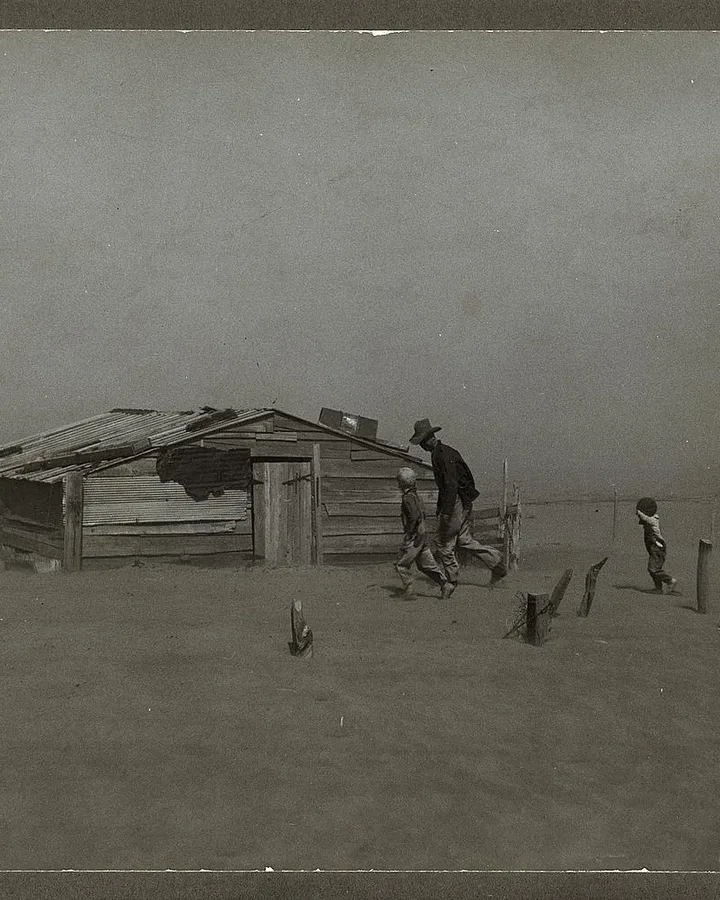
Farmer and Sons Walking in the Face of a Dust Storm (1936)
A farmer and his two young sons walk past a weathered shed while dust buries the fence posts around them. Arthur Rothstein made the photograph in Cimarron County, in the Oklahoma Panhandle, in April 1936, and it became one of the defining images of the Dust Bowl. The family was later identified as Arthur Coble and his sons Milton and Darrel. Whether the scene was directed has been debated for decades.
The story behind it → -
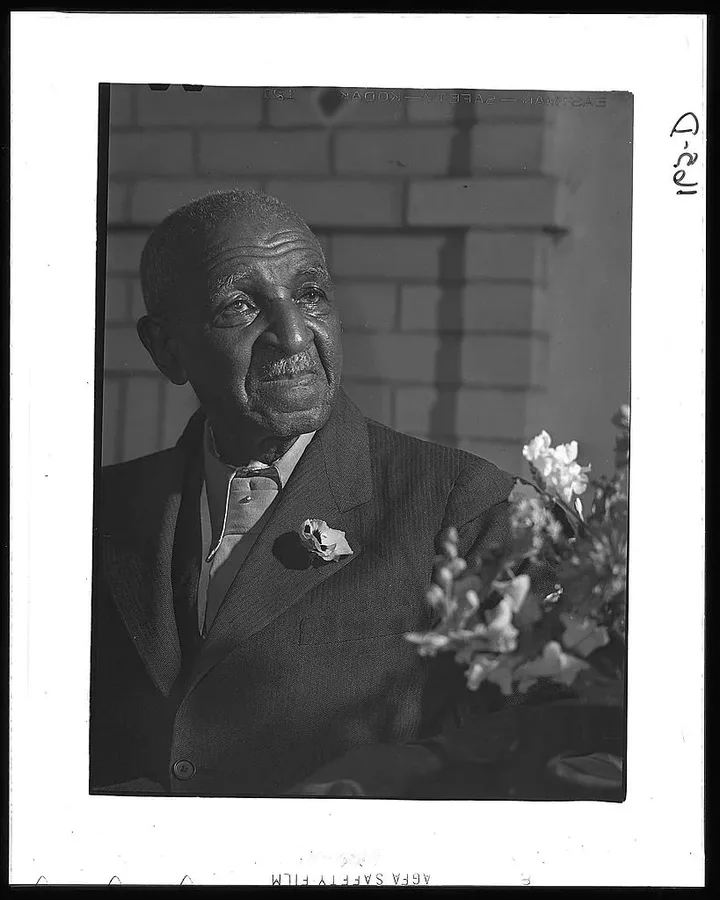
Dr. George Washington Carver, Tuskegee Institute, Alabama (1942)
An elderly George Washington Carver, in a tweed suit with a flower in his lapel, sits before a brick wall beside a spray of blossoms. Arthur Rothstein photographed the scientist at Tuskegee Institute in Alabama for the federal government's photography project; the Library of Congress dates the portrait to March 1942, less than a year before Carver's death. It has become one of the most widely reproduced late portraits of Carver.
The story behind it →